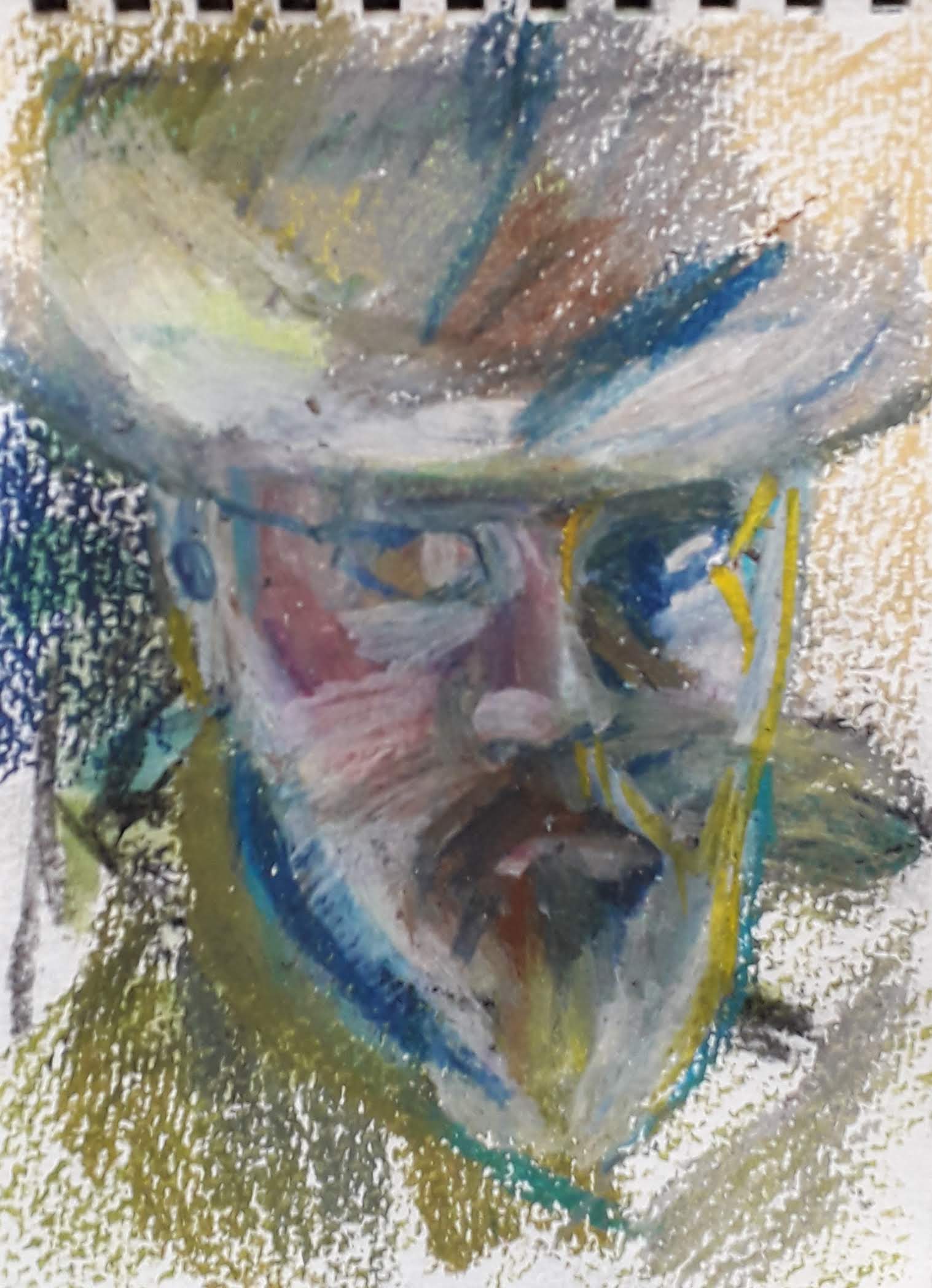
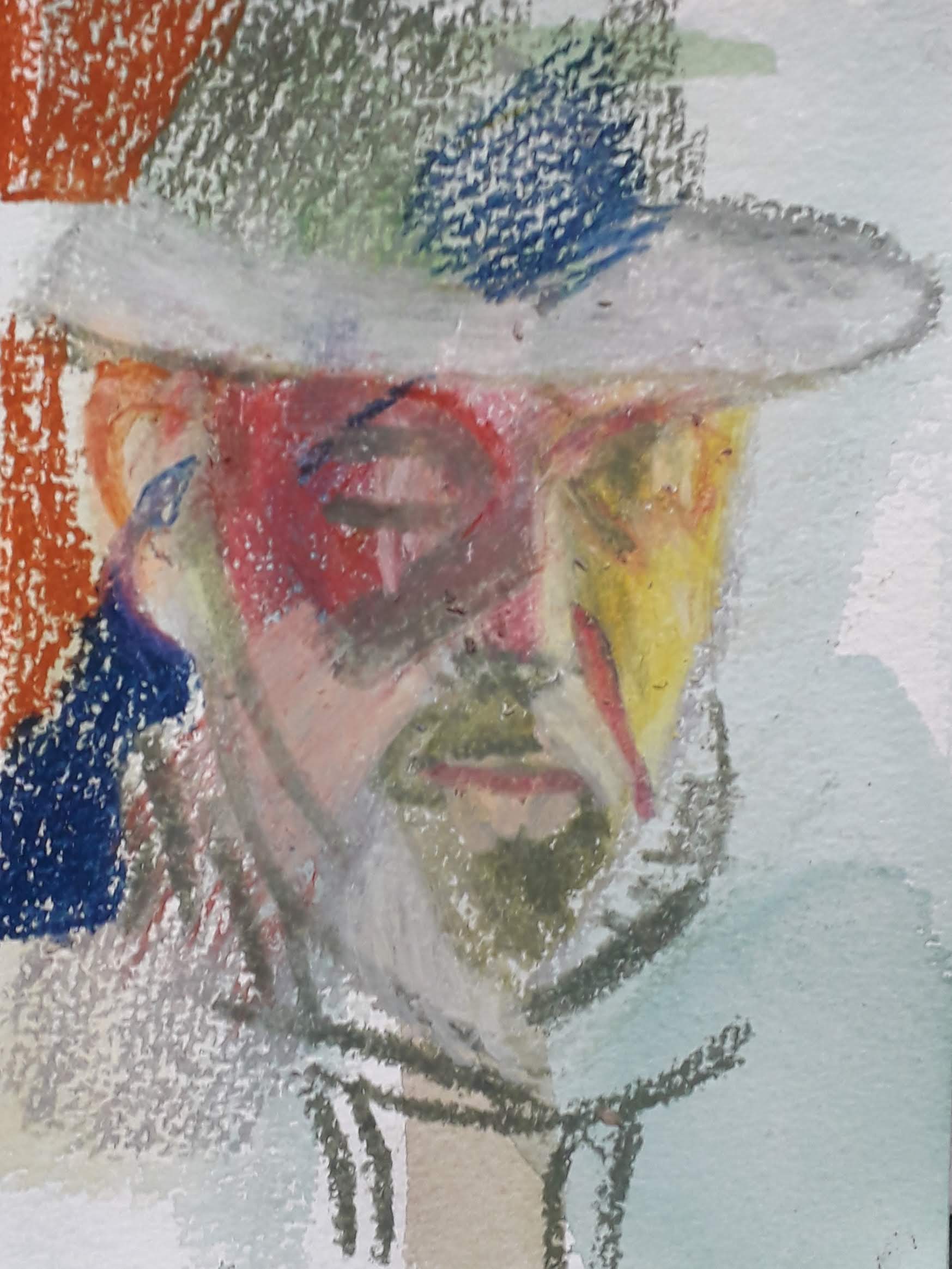
Michael Ward was born in Derry in the northwest of Ireland in 1970. He studied sculpture in Dublin in the early nineties, but he feels his most significant learning took place on his foundation course in Art and Design at Burnley College in 1988/89. It was in the intimate context of this small college that he learned observational drawing, spending at least one full day a week in the life drawing studio. The course tutor, Norman Scanlan, was a proponent of an ‘add and subtract’ technique, whereby observed marks were always being reassessed and corrected until you were convinced of their veracity. He also encouraged the use of everything available in the toolbox, pencils, pastels, chalks, inks and paints, even collage, to achieve desired effect!
On this type of drawing; Ward says: “Recently I was discussing the work of Giacometti with a friend; and she said she had begun to appreciate his work having previously struggled to make any ‘logical sense’ of it. I said I thought his work had a kind of contradictory ‘visceral logic’ to it and I think that comes from this method of working: assess and correct, assess and correct. It’s the same as this way of drawing that we learned in Burnley. The work becomes a complex matrix of marks and erasures, only concluded when the studio shuts, it gets dark or the artist is exhausted. On top of that; there is an implicit acceptance that the endeavour itself is kind of futile or impossible but ultimately; and again oxymoronically, worth pursuing.”
He also says “There’s something about drawing that thrills me in the same way as digging a hole to plant a tree. I regularly attend life drawing sessions and inevitably leave the studio with armfuls of drawings each one full of nascent paintings, prints and sculptures. These drawings are so full of potential, so replete, that I think one drawing could occupy my studio time for years to come. I bring them to my own studio buzzing at the thought of an afternoon unpicking them. The following week, I resume the singular, purposeful and absorbing work that provides so much hope.”




 Michael Ward Artist